
Caribbean Desserts: The Sweetest Side of Island Cooking
Caribbean Desserts: The Sweetest Side of Island Cooking Caribbean desserts reflect the same bold, layered approach as the region's savory cooking — tropical fru
Caribbean Desserts: The Sweetest Side of Island Cooking
Caribbean desserts reflect the same bold, layered approach as the region's savory cooking — tropical fruits, warm spices, coconut, and rum come together in sweets that are intensely flavorful without being fussy. From dense puddings to icy granitas, here is a guide to the most beloved desserts across the Caribbean islands.
What Are the Most Popular Caribbean Desserts?
Rum Cake (Black Cake)
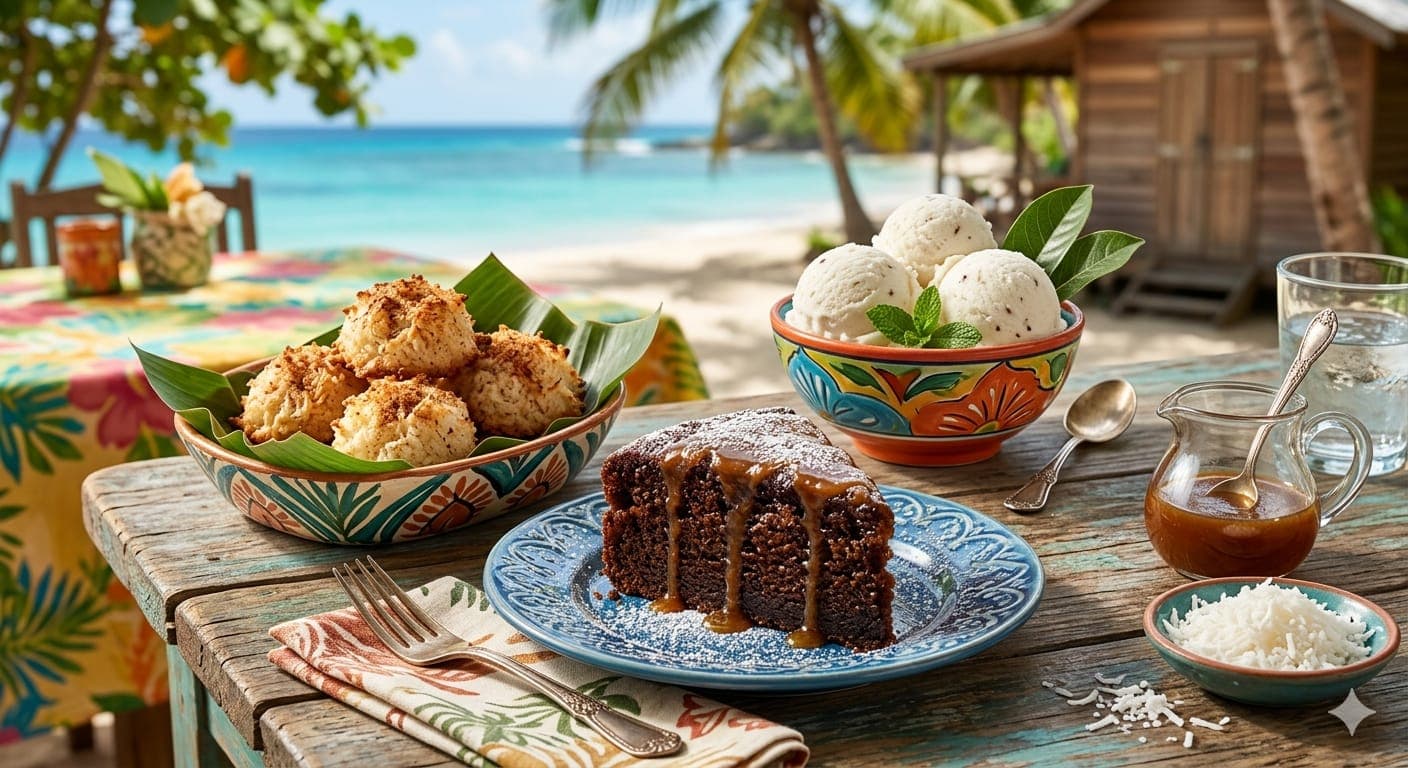
Caribbean rum cake — called black cake in many islands — is the crown jewel of festive baking. Made with fruits (prunes, raisins, currants, cherries) that have been soaked in rum and wine for weeks or even months, the cake is dense, dark, moist, and intensely flavored. It's baked at Christmas and for weddings, often wrapped in rum-soaked cloth and aged further after baking. A slice of proper black cake is nothing like the dry, fruitcake stereotype — it's deeply aromatic, boozy, and tender.
Coconut Drops (Jamaica)
Coconut drops are one of Jamaica's most beloved traditional sweets — rough, sticky mounds of fresh coconut chunks cooked with brown sugar, ginger, and spices until the sugar crystallizes around the coconut pieces. They're sold by roadside vendors and at markets, eaten as a snack or dessert. The combination of chewy coconut, caramel-like brown sugar, and fiery ginger makes them completely addictive.
Cassava Pone (Caribbean-Wide)
Cassava pone is a dense, moist pudding-like cake made from grated raw cassava mixed with coconut, brown sugar, cinnamon, nutmeg, vanilla, and butter, then baked slowly until set. The result is somewhere between a pudding and a cake — dense, slightly chewy, fragrant, and deeply satisfying. Every island has its own version, some wetter, some firmer, but all are beloved.
Corn Pone / Cornmeal Pudding
Similar in technique to cassava pone, cornmeal pudding is made from fine yellow cornmeal cooked with coconut milk, brown sugar, cinnamon, nutmeg, and raisins into a firm, sliceable pudding. It's baked in a pan and served in squares. The texture is smooth and creamy inside with a slightly firmer crust — a genuinely comforting dessert.
Soursop Ice Cream
Soursop (guanabana) — a large, spiny tropical fruit with creamy white flesh — makes an extraordinary ice cream. The flavor is a cross between strawberry, pineapple, and coconut — tropical, floral, and subtly tart. Blended with cream and condensed milk and churned, it produces one of the most distinctive and delicious ice creams in the world. In the Caribbean, it's also served as a chilled drink or sorbet.
Tamarind Balls
Tamarind balls are a beloved Caribbean street candy — pods of ripe tamarind are shelled, deseeded, and rolled with sugar (and sometimes pepper and salt) into golf-ball-sized rounds. The flavor is an intense sweet-sour-slightly-salty combination that is utterly addictive. They're found across the Caribbean and in Indian-Caribbean communities in particular. The addition of pepper in some versions adds a surprising heat that makes the candy even more complex.
Bread Pudding with Rum Sauce
Caribbean bread pudding is baked with coconut milk, raisins, cinnamon, nutmeg, and vanilla, then soaked in a warm rum butter sauce that seeps into every crevice. It's rich, custardy, and deeply perfumed with spice. Unlike its plain counterparts elsewhere, the rum sauce transforms it into something genuinely festive.
Guava Cheese (Guava Paste)
Guava paste — a firm, sliceable confection made from guava pulp cooked down with sugar until very thick — is a staple sweet across the Caribbean and Latin America. In Cuba and Puerto Rico it's eaten with white cheese (queso blanco) as a classic pairing called Romeo y Julieta. It's also used as a filling in pastries, empanadas, and turnovers.
Pone (Sweet Potato Pudding)
Sweet potato pudding — grated sweet potato mixed with coconut milk, spices, and sugar and baked until firm — is a Jamaican classic. The bright orange pudding is sweet, fragrant, and has a dense, almost fudge-like texture. It's served at gatherings and is one of Jamaica's most nostalgic home desserts.
What Role Does Rum Play in Caribbean Desserts?
Rum — distilled from sugarcane, which has been grown in the Caribbean since the 17th century — is embedded in the region's dessert tradition. It appears as:
- A soaking agent for dried fruits in black cake and puddings
- A sauce poured over bread pudding, cake, and ice cream
- A flavoring in buttercream, glazes, and custards
- A preservative that extends the shelf life of holiday cakes
Dark rums — Jamaican Appleton Estate, Barbadian Mount Gay, Trinidadian Angostura — are preferred for cooking, as their molasses character pairs naturally with the warm spices (cinnamon, nutmeg, allspice) common in Caribbean baking.
What Caribbean Desserts Are Easy to Make at Home?
If you're new to Caribbean baking, these are approachable starting points:
- Tamarind balls — no baking, just mixing and rolling
- Cornmeal pudding — simple stovetop-then-oven technique
- Coconut drops — one pot, basic candy-making skills
- Soursop smoothie/sorbet — blend canned soursop pulp with condensed milk and freeze
- Rum cake from scratch — more involved, but immensely rewarding
Caribbean desserts reward patience and quality ingredients. Use real coconut milk (not lite), good dark rum, fresh spices, and raw cane sugar wherever possible — the depth of flavor these ingredients provide is what makes Caribbean sweets so distinctive and memorable.
Comments(0 comments)