
Caribbean Spices and Seasonings: A Complete Guide
Caribbean Spices and Seasonings: A Complete Guide The soul of Caribbean cooking lives in its seasonings. Unlike cuisines that rely on heavy sauces or fats for f
Caribbean Spices and Seasonings: A Complete Guide
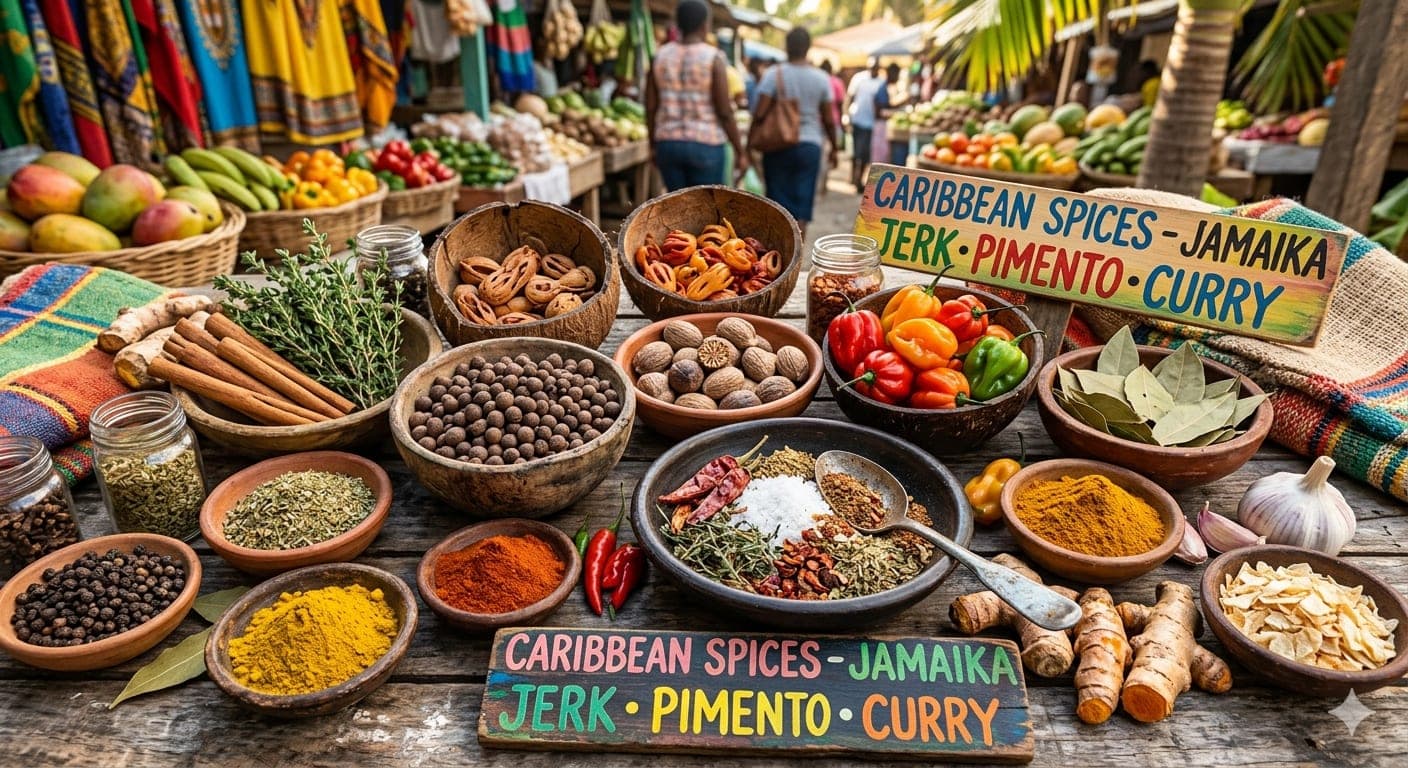
The soul of Caribbean cooking lives in its seasonings. Unlike cuisines that rely on heavy sauces or fats for flavor, Caribbean cooks build complexity through aromatic herbs, warm spices, and pungent peppers layered at every stage of cooking. Understanding these ingredients is the first step to unlocking authentic Caribbean flavor at home.
What Are the Most Important Spices in Caribbean Cooking?
Allspice (Pimento)
Allspice is arguably the single most important spice in Caribbean cuisine — particularly Jamaican cooking. It tastes like a blend of cloves, cinnamon, and nutmeg (hence the name), and it appears in jerk seasoning, oxtail, curries, and even desserts. Jamaica grows some of the world's finest allspice berries. Use whole berries for slow-cooked dishes and ground for rubs and marinades.
Scotch Bonnet Pepper
The scotch bonnet is the Caribbean's signature pepper — a small, wrinkled, lantern-shaped chile that registers 100,000–350,000 Scoville heat units. Beyond its ferocious heat, it has a distinctive fruity, floral flavor that no other pepper replicates exactly. It's essential in jerk seasoning, pepper sauce, and countless stews. Habaneros are the closest widely available substitute in flavor profile.
Thyme
Fresh thyme is used with remarkable generosity in Caribbean cooking. It appears in almost every savory dish — marinades, soups, rice, stews, and seafood. Caribbean cooks typically add whole sprigs rather than picking the leaves, pulling them out before serving. The herb bridges the gap between the heat of scotch bonnets and the warmth of spices like allspice.
Cumin
Cumin found its way into Caribbean cooking through Spanish colonizers and Indian indentured laborers. It's especially prominent in Cuban sofrito, Trinidadian curry, and Puerto Rican adobo. Ground cumin adds an earthy, slightly bitter backbone to spice blends.
Turmeric
Introduced through Indian indentured labor in Trinidad and Guyana, turmeric (and its cousin, fresh "yellow ginger") colors curries and rice dishes a vibrant gold. It adds mild earthiness and is valued as much for its color as its flavor.
What Herbs Do Caribbean Cooks Use Most?
Culantro (Chadon Beni / Shadow Beni)
Culantro is one of the Caribbean's most distinctive herbs — long, serrated leaves with an intense cilantro-like flavor that is far more pungent than cilantro itself. It's called chadon beni or shadow beni in Trinidad and recao in Puerto Rico. It's a key ingredient in green seasoning, sofrito, and meat marinades. If you can find it fresh at a Caribbean or Latin grocery, it's irreplaceable.
Green Onions (Scallions)
Scallions are used in virtually every Caribbean marinade and seasoning blend. Both the white and green parts are used, adding a mild onion flavor without the sharpness of regular onions. They're blended into green seasoning, stuffed into meat before roasting, and scattered over finished dishes.
Cilantro
Regular cilantro (coriander leaf) is widely used, particularly in Latin Caribbean cooking — Cuban, Puerto Rican, and Dominican dishes rely on it heavily in sofrito. It's more delicate than culantro and is typically added at the end of cooking to preserve its flavor.
Bay Leaves
Bay leaves appear in slow-cooked meat dishes, soups, and rice throughout the Caribbean. West Indian bay leaves (from the bay rum tree, Pimenta racemosa) have a distinctly different — more clove-like — character than European bay. If you can find them, they add an unmistakably Caribbean note.
What Is Green Seasoning?
Green seasoning is the Caribbean's all-purpose marinade base — a blended paste of fresh herbs and aromatics that is rubbed into meat, fish, and vegetables before cooking. Every family has its own variation, but the core ingredients are typically:
- Culantro (chadon beni) or cilantro
- Green onions (scallions)
- Garlic
- Thyme
- Scotch bonnet or seasoning pepper
- Onion
- A splash of water or lime juice to blend
Blend everything until smooth. Green seasoning keeps refrigerated for 1–2 weeks and can be frozen for months. Many Caribbean households keep a jar in the fridge at all times — it's the foundation of chicken stews, curries, fish seasoning, and soups.
What Is Adobo Seasoning?
Adobo is the backbone spice blend of Puerto Rican and Cuban cooking. The dry spice version typically contains garlic powder, oregano, salt, black pepper, turmeric (for color), and cumin. It's rubbed generously onto pork, chicken, and beef before roasting or frying. The wet version (adobo mojado) adds vinegar and crushed garlic for a paste-like marinade.
Sazón is a related Puerto Rican blend that adds annatto (achiote) seeds for a deep orange-red color. It's stirred into rice, beans, and stews to add both color and an earthy, slightly sweet flavor.
What Is Sofrito?
Sofrito is the aromatic base of Latin Caribbean cooking — a finely chopped or blended mixture of aromatics cooked in oil at the beginning of a dish to build flavor. Puerto Rican sofrito typically includes:
- Ají dulce (sweet seasoning peppers)
- Culantro and cilantro
- Garlic
- Onion
- Bell peppers
- Tomatoes (sometimes)
Cuban sofrito is simpler — typically garlic, onion, bell peppers, tomatoes, and cumin cooked in olive oil. Sofrito is cooked for several minutes until the vegetables soften and the mixture becomes fragrant and golden before other ingredients are added.
What Is Curry Powder in Caribbean Cooking?
Caribbean curry powder — particularly the Trinidadian and Guyanese versions — differs significantly from Indian curry powder. It typically has a higher proportion of turmeric and coriander with less garam masala-style warmth. Trinidadian curry goat, duck curry, and curried chickpeas (channa) use a curry powder that creates a bright yellow, fragrant sauce quite distinct from South Asian curries.
When cooking Caribbean-style curry, the powder is "burned" in hot oil for 1–2 minutes before adding meat or vegetables — a technique that removes raw starch flavor and deepens the spice character dramatically.
Where Can You Buy Caribbean Spices?
Caribbean and West Indian grocery stores carry most specialty ingredients including culantro, scotch bonnet peppers, whole allspice berries, sazón, and green seasoning paste. In areas without these stores, Caribbean spice blends are available online. For scotch bonnets, Caribbean pepper hot sauces (Grace, Walkerswood, Chief) can substitute when fresh peppers aren't available — though the flavor won't be identical to fresh.
Comments(0 comments)