
How to Make Authentic Jerk Chicken
How to Make Authentic Jerk Chicken: The Complete Guide Jerk chicken is Jamaica's most famous culinary export — a dish of smoky, fiery, deeply spiced grilled chi
How to Make Authentic Jerk Chicken: The Complete Guide
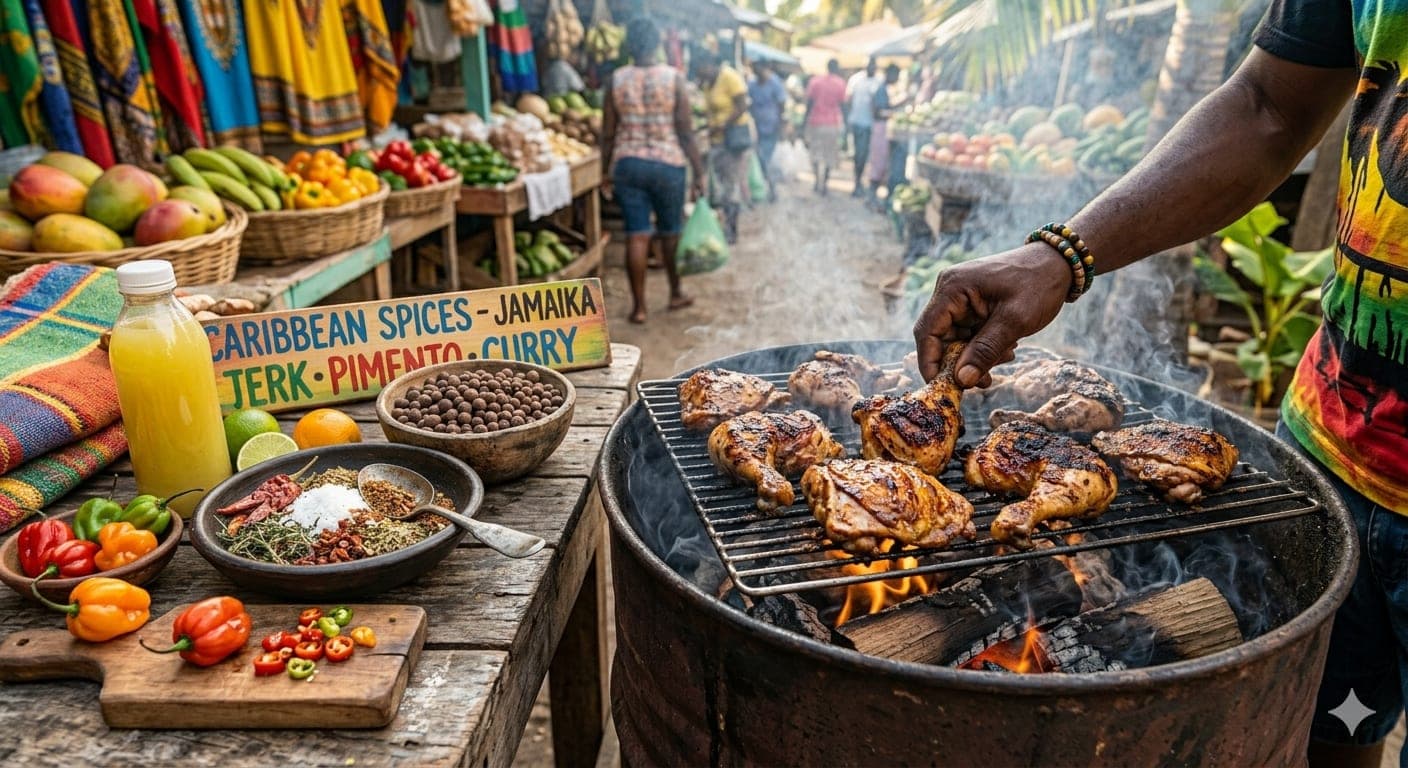
Jerk chicken is Jamaica's most famous culinary export — a dish of smoky, fiery, deeply spiced grilled chicken that has captivated food lovers around the world. But authentic jerk is more than a recipe. It's a technique, a tradition, and a way of cooking that dates back centuries. This guide answers the most common questions about jerk chicken and walks you through making it properly at home.
What Is Jerk Chicken, Exactly?
Jerk is both a spice blend and a cooking method. The word "jerk" comes from the Spanish charqui (dried meat), but the technique itself was developed by the Maroons — formerly enslaved Africans who escaped into Jamaica's Blue Mountains and developed a method of heavily seasoning and slow-cooking wild boar over pimento wood fires. Today, jerk refers to any meat marinated in the signature spice blend and cooked low and slow over fire or coals.
The two non-negotiable elements of authentic jerk are scotch bonnet peppers and allspice (pimento). Everything else — thyme, garlic, ginger, cinnamon, nutmeg, green onions — supports and amplifies those two foundational flavors.
What Ingredients Do You Need for Jerk Marinade?
A traditional jerk marinade contains:
- 4–6 scotch bonnet peppers (or habaneros as a substitute)
- 6 green onions (scallions), roughly chopped
- 4 garlic cloves
- 1 tablespoon fresh thyme leaves (or 1 tsp dried)
- 2 tablespoons ground allspice
- 1 tablespoon brown sugar
- 1 tablespoon soy sauce
- 2 tablespoons vegetable oil
- Juice of 1 lime
- 1 teaspoon ground cinnamon
- ½ teaspoon ground nutmeg
- Salt and black pepper to taste
Blend all ingredients into a smooth paste. The marinade should be thick enough to coat the chicken without dripping off. Taste before applying — it should be intensely flavored, since it will mellow during the long marinating and cooking process.
How Long Should You Marinate Jerk Chicken?
The longer, the better. A minimum of 4 hours will give acceptable flavor, but overnight marinating (12–24 hours) is what separates good jerk chicken from great jerk chicken. The acid from the lime juice, the salt, and the spices need time to penetrate deep into the meat.
Score the chicken pieces deeply with a knife before marinating — this opens pathways for the seasoning to reach the bone, which is where jerk chicken's signature depth of flavor comes from.
What's the Best Way to Cook Jerk Chicken?
Authentic jerk is cooked over pimento (allspice) wood — the smoke from the wood contributes a crucial aromatic layer that is impossible to fully replicate. At home, you have several good options:
Charcoal Grill (Best Option)
Set up a two-zone fire: hot coals on one side, no coals on the other. Sear the chicken over direct heat for 3–4 minutes per side to get char marks and caramelization, then move to indirect heat and cook covered for 30–45 minutes at around 300–325°F (149–163°C). The low indirect heat finishes the chicken slowly, keeping it juicy and allowing the spices to mellow into the meat.
Gas Grill
Preheat one side on high, leave the other on low. Sear on high, finish on low with the lid closed. Add soaked wood chips (hickory or applewood are decent substitutes for pimento wood) in a foil pouch to introduce some smoke.
Oven
Roast at 375°F (190°C) for 45–55 minutes, then broil for the final 5 minutes to char the surface. You won't get smoke, but the flavor profile from the marinade will still be excellent.
How Do You Know When Jerk Chicken Is Done?
Chicken is safe to eat at an internal temperature of 165°F (74°C) measured at the thickest part of the thigh, away from bone. However, jerk chicken benefits from cooking to 175–180°F (79–82°C) in the thigh — the slightly higher temperature breaks down connective tissue and renders fat, giving the meat the tender, pull-apart quality that defines great jerk.
What Do You Serve With Jerk Chicken?
Traditional Jamaican sides that pair perfectly with jerk chicken:
- Rice and peas — kidney beans cooked with coconut milk, thyme, and scotch bonnet. The creamy, mildly seasoned rice balances the spicy chicken beautifully.
- Festival — slightly sweet fried dumplings made from cornmeal and flour. The sweetness contrasts the heat.
- Bammy — cassava flatbread, traditionally soaked in coconut milk and pan-fried.
- Roasted breadfruit — starchy and mildly nutty, perfect for absorbing the jerk juices.
- Coleslaw — a cool, tangy counterpoint to the heat.
- Fried plantains — sweet ripe plantains add caramel-like contrast.
Can You Make Jerk Seasoning Less Spicy?
Yes. Scotch bonnets are extremely hot (100,000–350,000 Scoville units), and reducing or substituting them is completely valid. Options:
- Use fewer scotch bonnets and remove the seeds and white pith (where most of the heat lives)
- Substitute one scotch bonnet for 2–3 jalapeños — you'll keep a fruity pepper flavor with far less fire
- Use a single habanero with seeds removed — habaneros are similar in flavor to scotch bonnets but widely available
Do not eliminate peppers entirely, as their fruity flavor is central to the character of jerk seasoning even when the heat is reduced.
Can Jerk Seasoning Be Used on Other Meats?
Absolutely. While chicken is the most iconic application, jerk marinade works excellently on:
- Pork — jerk pork (particularly shoulder) is actually older than jerk chicken in Jamaican tradition
- Shrimp — marinate for 30 minutes and grill on skewers for 2–3 minutes per side
- Fish — snapper, mahi-mahi, and tilapia work well; marinate no more than 1 hour
- Tofu or jackfruit — press firmly, score deeply, marinate overnight for a vegetarian version
- Lamb chops — an unusual but spectacular application
How Long Does Jerk Chicken Keep?
Cooked jerk chicken keeps refrigerated for up to 4 days. It reheats beautifully — wrap in foil and warm in a 325°F (163°C) oven for 15 minutes, or reheat on a grill or skillet to revive the char. Leftover jerk chicken makes exceptional tacos, sandwiches, fried rice, and grain bowls.
The raw marinade can be made ahead and refrigerated for up to 1 week, or frozen in ice cube trays for up to 3 months — a convenient way to have authentic jerk flavor ready at any time.
Comments(0 comments)