
What Do People Eat for Breakfast in the Caribbean?
What Do People Eat for Breakfast in the Caribbean? Caribbean breakfasts are anything but boring. Across the islands, morning meals are hearty, flavorful affairs
What Do People Eat for Breakfast in the Caribbean?
Caribbean breakfasts are anything but boring. Across the islands, morning meals are hearty, flavorful affairs that often include saltfish, dumplings, plantains, porridge, or fresh tropical fruit. Far from the cereal-and-toast routine familiar in North America, a traditional Caribbean breakfast reflects the region's bold culinary identity and its history of hard-working people who needed sustaining food to start the day.
What Is the Most Famous Caribbean Breakfast Dish?
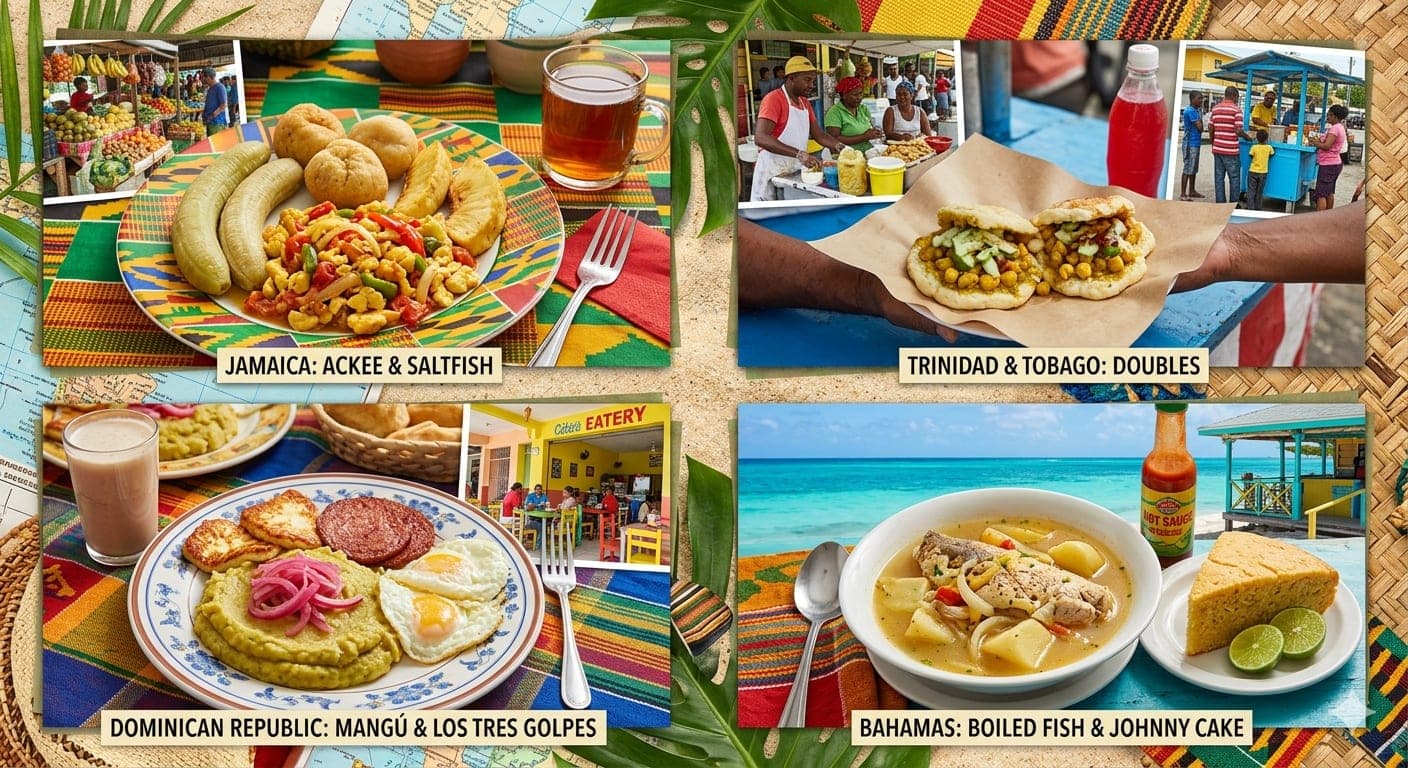
Jamaica's national dish — ackee and saltfish — is traditionally a breakfast food. Ackee is a yellow fruit (originally from West Africa) whose flesh resembles scrambled eggs when cooked. It's sautéed with salt cod, onions, scotch bonnet pepper, thyme, and tomatoes into a savory, creamy scramble that is utterly unique. It's served alongside boiled green bananas, fried dumplings (johnny cakes), or breadfruit.
This dish is so central to Jamaican identity that it appears on the national coat of arms. Ackee must be properly ripened before eating — unripe ackee is toxic — which is why canned ackee (sold in Caribbean groceries worldwide) is the safest option outside Jamaica.
What Other Breakfasts Are Common Across the Caribbean?
Saltfish and Bake (Trinidad and Tobago)
In Trinidad, "bake and shark" or "bake and saltfish" is a beloved breakfast. Bake is a soft, fried or baked flatbread — pillowy on the inside with a golden crust. It's split open and filled with saltfish sautéed with onions, tomatoes, peppers, and herbs. Vendors sell this from roadside stands across the country, and it's considered the definitive Trinidadian breakfast sandwich.
Provisions and Saltfish (Barbados, Eastern Caribbean)
"Provisions" refers to the starchy ground vegetables common across the Eastern Caribbean — yam, sweet potato, cassava, dasheen, and eddoe. Boiled together and served alongside stewed or fried saltfish, this is a nutritious, filling breakfast that has sustained Caribbean workers for generations.
Boiled Cornmeal Porridge (Jamaica, Haiti)
Cornmeal porridge is Jamaica's equivalent of oatmeal — a smooth, sweetened porridge made from fine cornmeal simmered with coconut milk, condensed milk, cinnamon, nutmeg, and vanilla. It's creamy, comforting, and deeply warming. In Haiti, a similar dish called mamba — peanut butter porridge — is a popular morning staple.
Roti and Chokha (Trinidad, Guyana)
In the Indo-Caribbean communities of Trinidad and Guyana, breakfast often means fresh roti (flatbread cooked on a tawa, a flat iron griddle) with chokha — roasted and mashed vegetables such as tomatoes, eggplant, or potatoes seasoned with garlic and pepper. The roti is torn and used to scoop up the smoky, garlicky vegetable mash.
Mangu (Dominican Republic)
Mangu is the Dominican breakfast classic — a smooth, buttery mash of boiled green plantains mashed with butter and the water they were cooked in. It's served with los tres golpes ("the three strikes"): fried salami, fried cheese, and fried eggs, with pickled red onions on top. The combination of starchy, creamy plantain with salty salami and tangy onions is deeply satisfying.
Saltfish Buljol (Trinidad)
Buljol is a cold saltfish salad made from shredded soaked saltfish mixed with diced tomatoes, onions, cucumbers, and scotch bonnet, dressed with lime juice and olive oil. It's eaten with hot bake or roasted bakes for a refreshing, bright breakfast that contrasts the richness of fried foods.
Coconut Bake (Eastern Caribbean)
Coconut bake is a dense, slightly sweet bread baked with fresh or desiccated coconut. It's sliced thick and eaten with butter, cheese, or jam — or used to soak up saltfish gravy. The coconut gives it a subtle sweetness and tender, moist crumb that distinguishes it from plain white bread.
What Fruit Do Caribbean People Eat for Breakfast?
Fresh tropical fruit is a natural companion to any Caribbean breakfast. Common morning fruits include:
- Papaya (pawpaw) — sliced with a squeeze of lime, it's light and digestive
- Mango — eaten ripe and juicy, or green with salt and pepper as a savory snack
- Breadfruit — roasted whole over fire or boiled, it has a starchy, potato-like quality
- Plantain — boiled green as a starchy side or fried ripe as a sweet complement
- Soursop — blended into a thick, creamy juice with milk and sugar; incredibly refreshing
- Star apple (caimite) — eaten fresh; the sweet, milky flesh is a beloved morning treat in Jamaica
What Do Caribbean People Drink for Breakfast?
- Bush tea — herbal teas made from fresh leaves such as cerasee, soursop leaf, lemongrass, or mint. Bush tea is embedded in Caribbean folk medicine and is drunk more as a health tonic than a caffeinated stimulant.
- Cocoa tea — hot chocolate made from grated local cocoa (cacao) sticks with milk, cinnamon, and nutmeg. This is richer and more complex than processed hot cocoa — a morning ritual in many Caribbean households.
- Coffee — Jamaica's Blue Mountain coffee is among the world's most prized; strong coffee with condensed milk is a breakfast staple across the region.
- Fresh juice — freshly squeezed orange, grapefruit, or passion fruit juice is common in tropical areas where citrus grows abundantly.
How Is Caribbean Breakfast Different From American Breakfast?
American breakfasts trend toward sweet (pancakes, cereal, pastries) or quick (toast, eggs). Caribbean breakfasts lean savory, starchy, and filling — designed for people with physically demanding days ahead. The use of saltfish, plantains, and root vegetables as morning staples reflects a tradition of maximizing nutrition and flavor from inexpensive, shelf-stable, or home-grown ingredients. Breakfast in the Caribbean is rarely rushed — it's a meal that deserves attention and time.
Comments(0 comments)